
Detroit-style
Rectangular pan pie: thick but airy, crispy fried bottom, caramelized frico cheese edge.
Cheese to the pan walls; sauce often striped on top ("red top").
By the square, with your hands. Corners are currency.
 Order now
Pizza 101
The square pan pizza we build our reputation on: airy crumb, crispy fried bottom, and a caramelized cheese edge you can hear. Here's what it is, where it came from, and how it stacks up against NY, Sicilian, and deep dish.
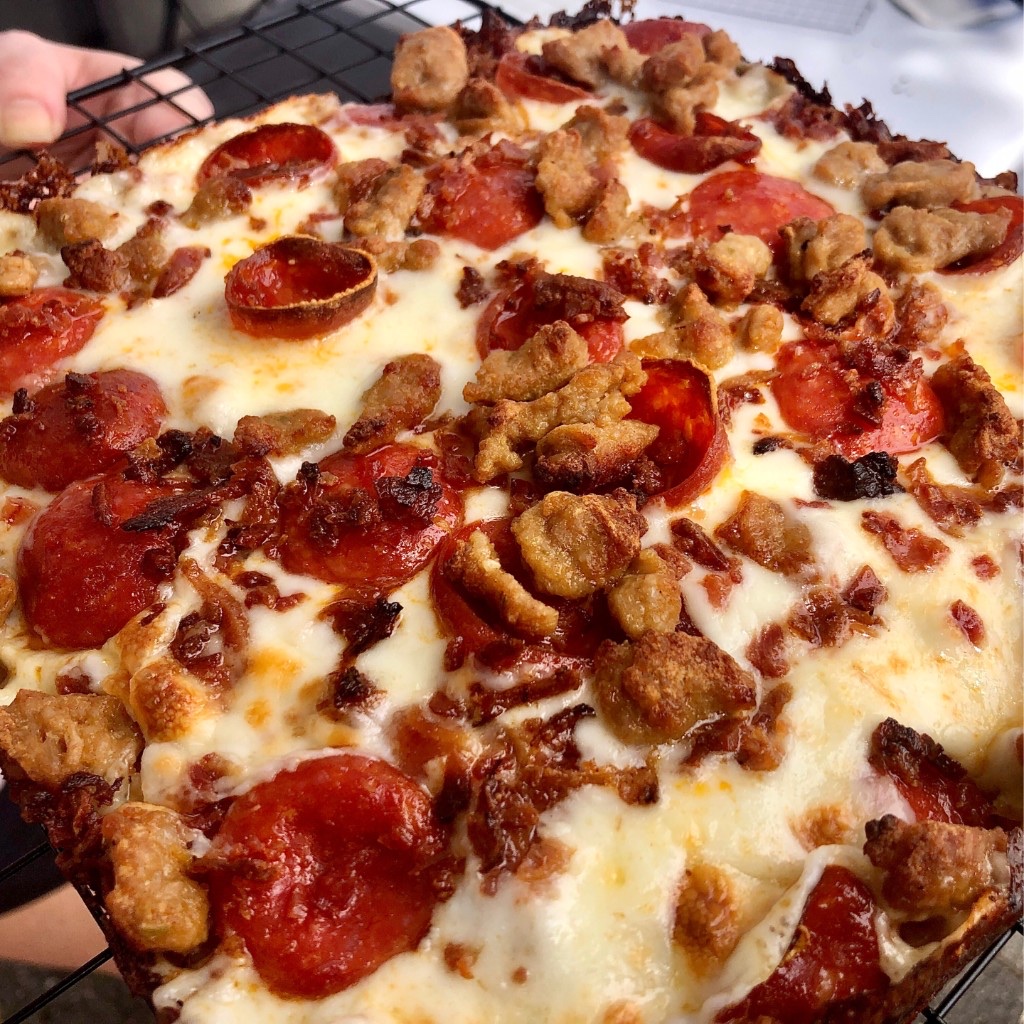
Detroit-style pizza is a rectangular pan pizza with a thick-but-light, open crumb, a bottom that fries crisp in an oiled steel pan, and cheese spread all the way to the pan walls so it caramelizes into a crunchy, lacy edge: the frico crust. Sauce often goes on top of the cheese instead of under it.
It was born at Buddy's Rendezvous in Detroit in 1946, where the first pies were baked in blue steel pans borrowed from the city's automotive plants. The pans were meant to hold parts; it turned out they held greatness.
At Uncle G's we bake 9×9" pans the same spirit: high-hydration dough proofed in the pan, cheese pushed hard to the corners, and a bake that leaves the interior airy and the edges deeply crisped. One pan feeds about two people as a meal.
Frico is what happens when cheese meets hot steel and caramelizes: the shredded cheese along the pan wall fries into a crisp, savory lace that wraps every square's border. It looks almost burnt. It is not burnt. It is the best part, and leaving it on the plate is the only wrong way to eat this pizza.
Corner pieces have two frico walls each. There are only four per pan. Plan your family dynamics accordingly.
People lump every thick pizza together, so here's the breakdown from a shop that makes squares and rounds side by side every day.
Rectangular pan pie: thick but airy, crispy fried bottom, caramelized frico cheese edge.
Cheese to the pan walls; sauce often striped on top ("red top").
By the square, with your hands. Corners are currency.
Big, thin, round pie with a foldable rim.
Sauce down, cheese over - classic order of operations.
By the folded slice, ideally while walking somewhere.
Thick square too, but breadier and denser (a focaccia cousin without the fried pan edge).
Traditionally more sauce-forward; no caramelized cheese wall.
By the square, usually softer bite than Detroit.
Tall, pastry-like crust built up the sides of a round pan.
Cheese on the bottom, chunky sauce on top. Practically a pie.
Knife and fork. Clear your afternoon.
FAQ
No. Deep dish is a tall, dense, knife-and-fork build with the sauce inside a pastry-like crust. Detroit-style is lighter: an airy square you eat with your hands, defined by its crispy fried bottom and caramelized frico cheese edge.
Frico is the crispy, caramelized cheese edge formed when the cheese along the pan wall fries against hot steel during the bake. It's intentionally dark, deeply savory, and completely edible. It's the signature of the style.
Both are thick squares, but Sicilian leans bready and soft like focaccia, while Detroit-style has an airier crumb, a fried-crisp bottom from the oiled pan, and a caramelized cheese edge that Sicilian doesn't have.
Our 9×9" pans feed about 2 people as a meal. For groups, mix a few pan flavors or add 16" NY pies. The catering serving guide breaks down how much to order by headcount.
Uncle G's bakes Detroit-style pans at the Riverchase shop in Hoover (1851 Montgomery Hwy Ste 107), the Hop City trailer on Birmingham's Southside (2924 3rd Ave S), and the roaming mobile trailer. See locations or order online from the homepage.
The only real answer is to try a pan next to a 16" NY pie and argue about it with people you like.